Posts

Did Halting In-Person Visits During Covid-19 Affect Knee Replacement Outcomes at Hospital for Special Surgery?

Image
At Hospital for Special Surgery (HSS), we set out to evaluate outcomes for recent knee replacement patients when nonessential in-person doctor visits and physical therapy were halted in March 2020 due to the pandemic. Our thought-provoking study found that the shutdown did not lead to a higher complication rate, nor did it affect patient-reported outcomes after surgery. Our study appeared online ahead of print in the Archives of Orthopaedic and Trauma Surgery . Elective, nonessential orthopedic care, including in-person office visits and physical therapy, was halted on March 16, 2020 at the onset of the COVID-19 surge in New York City. At that time, HSS rapidly expanded its telehealth and tele-rehabilitation services so patients could receive their care remotely, including post-operative visits and physical therapy.  Our study aimed to assess complications during the first 90 days following surgery and patient-reported outcomes within one year of surgery. We identified 624 patients...

A Steroid Injection for Bone-on-Bone Arthritis? Not So Fast!

Image
Sometimes, arthritis gets so bad that nothing seems to help, and people decide they are ready for joint replacement surgery. When that time comes, some patients are surprised to learn they will have to wait a few months because they recently had an injection of a steroid or hyaluronic acid. Waiting is not the only issue. The injections do little to relieve pain when someone has bone-on-bone arthritis and is a candidate for joint replacement. If there is any pain relief at all, it is very short-lived, and most patients are very disappointed. The other issue is that patients who receive a steroid or hyaluronic acid injection should wait approximately three months from the date of their last injection to have a hip or knee replacement. This is because studies have demonstrated an increased risk of infection in the first three months following these injections.   When elective surgeries resumed after the pandemic pause, I saw five patients over a two-week period whose joint replace...

Could a Cementless Knee Replacement Benefit Patients? Early Results of Our HSS Study

Image
Cementless knee replacement, an alternative to traditional cemented knee replacement surgery, is gaining interest in the field of orthopedic surgery. We launched a study at Hospital for Special Surgery (HSS) to compare outcomes of a modern cementless knee implant to the standard knee implant that requires bone cement for fixation.  Our study found no difference in hospital length of stay, complications, hospital readmission within 90 days of surgery, or rates of revision surgery at two-year patient follow-up. We presented our research at the American Academy of Orthopaedic Surgeons 2022 Annual Meeting in Chicago.  With respect to time spent in the operating room (OR), using the cementless implant reduced OR time by 25%, saving an average of 27 minutes. In a cementless total knee replacement, you do not have to wait for the cement to harden and dry like you do in a cemented knee replacement, which saves time.  Reduced time in the OR under anesthesia is advantageous to pati...

Outpatient Joint Replacement: Our Study Looks at Trends and Safety

Image
Outpatient hip and knee replacements are on the rise. Yes, increasing numbers of patients are going home the same day they have joint replacement surgery. We launched a study at Hospital for Special Surgery (HSS) to see if patients who went home the same day did as well as those who spent one or more nights in the hospital. Analyzing information from a large database that included patients nationwide, we found no significant difference in complication rates for outpatient hip replacement. For knee replacement, we found slightly higher odds of complications in patients who left the hospital on the day they had surgery. Overall, though, complications were not common in either knee replacement group, with an incidence of less than 1%. The study appeared online in The Journal of Arthroplasty . For our study, we were able to identify almost 1.8 million patients who underwent an elective total hip or total knee replacement between 2010 and 2017. We found that the annual rate of outpatien...

Our Study at HSS Finds Knee Replacement with Robotic Assistance Leads to Lower Complication Rate

Image
These days you hear a lot about the use of robotics in joint replacement and other surgical procedures. Many orthopedic surgeons who perform robot-assisted surgery find that it improves the accuracy and predictability of a knee or hip replacement.  Indeed, the use of computer-assisted navigation and robotic assistance for total knee replacement has grown tremendously over the past few years and shows no sign of slowing down. Among American Association of Hip and Knee Surgeons attending the 2020 annual meeting, 77% of respondents indicated that they used technology in their surgical cases. The most common reason they cited was to increase surgical precision. A large study we undertook at Hospital for Special Surgery (HSS) found another major advantage of using a robot. Accessing and analyzing a huge national database with information on more than one million knee replacement patients, we found that surgery performed with robotic assistance led to a lower complication rate in the fir...

Considering More Than One Joint Replacement? What to Expect and How to Have the Best Outcome

Image
After multiple joint replacement surgeries, my patient Lorry jokingly calls herself a “bionic woman.” She always enjoyed an active lifestyle, so when arthritis caused by wear and tear started to take an unwelcome toll on her knees and hips, she refused to take it sitting down. Over the last six years, she has received four joint replacements – both knees and both hips – so she could enjoy life without pain. It’s not unusual for patients to have advanced arthritis in two joints. Having four joint replacements is less common, but it does happen. I recommend that people considering multiple joint replacement surgeries do their research to find a high-volume joint replacement center and a highly experienced orthopedic surgeon who takes the time to answer all their questions and with whom they feel comfortable. For someone having more than one joint replacement, timing and recovery are important, and no two patients are alike. If someone has painful arthritis in both knees, for example,...

“Dual Mobility” Hip Replacement Does Double Duty: Relieves Pain and Reduces Risk of Dislocation

Image
Hip replacement to relieve arthritis pain is considered one of the most effective surgeries in the United States. Over the past decade, improvements in surgical technique, implant design, anesthesia and pain control after surgery have contributed to its success, says Geoffrey Westrich, MD, an orthopedic surgeon at Hospital for Special Surgery (HSS).  More than 450,000 total hip replacements are performed each year in the United States, according to the Agency for Healthcare Research and Quality. One of the most noteworthy advances is what’s known as a “dual mobility” hip replacement, according to Dr. Westrich, who has conducted several studies on the implant. He and colleagues have found that the dual mobility prosthesis reduces the risk of dislocation, one of the most common complications after hip replacement surgery. While the incidence is less than 2% at Hospital for Special Surgery and other major joint replacement centers, it is significantly higher at some other locations....

Cementless Knee Replacement Could Last Longer

Image
Knee replacement surgery is one of the most effective and predictable orthopedic procedures.  Hundreds of thousands of patients have a knee replacement each year so they can enjoy life pain-free and get back to activities they’ve given up.   Over the past couple of years, I’ve seen good outcomes with a newer type of “cementless” or uncemented knee replacement. There is reason to believe that this type of implant could last longer than traditional implants that require the use of bone cement.  The traditional implant used in knee replacement generally lasts a long time—15 to 20 years—but it doesn’t last indefinitely. When the implant wears out or loosens, patients generally need a second knee replacement, known as a revision surgery. The cementless knee replacement could change that.  In a standard knee replacement, the components of the implant are secured in the joint using bone cement. The technique has worked well for decades. But eventually, over time, the c...

Is Outpatient Joint Replacement Surgery Right for Me?

Image
Having a hip or knee replacement and going home from the hospital the same day is becoming more common. The surgery is generally performed early in the morning, and the patient goes home at the end of the day. Five years ago, outpatient joint replacement was almost unthinkable. But advances in technology, surgical technique and pain management over the past few years have made same-day hip or knee replacement a viable option for patients who meet certain criteria. During the pandemic, many people find this appealing since they leave the hospital more quickly and can spend their first night after surgery in the comfort of their own home. These days, much smaller incisions and robotic-assisted joint replacement, which allows for ultraprecise positioning of the implant, benefit patients who wish to go home the day of surgery. A study in the Bone & Joint Journal in 2018 by researchers in the United Kingdom found that robotic-assisted total knee replacement was associated with decrease...

Robotics Transforms Knee Replacement Surgery: Technology Allows for Ultraprecise, Customized Procedure

Image
Over the past two decades, I have seen many advances in joint replacement surgery that have benefited patients. I believe robotic-assisted knee replacement, which allows for an ultra-precise procedure, is one of the most exciting.  I recently reached a milestone when I performed my 500 th robotic-assisted knee replacement. I use the MAKO robotic system, which is FDA-approved for both total and partial knee replacements. Joint replacement is highly successful in relieving arthritis pain and improving quality of life, and robotic system allows us to really customize the procedure for each patient. The MAKO system allows for optimal alignment and positioning of the knee implant, as well as optimal ligament balancing, all critically important for the best outcome and long-term success of the surgery. Such precision could potentially lead to a longer-lasting knee replacement. Over the past few years, I've seen more patients in their 40s and 50s with arthritis. The main concern for ...

Joint Replacement During Pandemic? Long Island Dad Says "Yes" So He Can Dance at Daughter's Wedding

Image
John Schieck wanted to dance at his daughter’s wedding, and he wasn’t going to let the pandemic stop him. But his severely arthritic hip was another matter.  So, when the Long Island resident learned he could schedule a hip replacement when elective surgeries resumed at Hospital for Special Surgery (HSS), he didn’t hesitate. Before the pandemic, he had a knee replacement at HSS. In May of this year, he came to see me for a regular follow-up exam. Mr. Schieck’s knee was fine, but his hip pain and gotten much worse.  He had trouble sleeping at night and found himself limping at work. Mr. Schieck, who is 65, went ahead with hip replacement surgery at HSS in June, and two months later, he attended his daughter’s wedding. “My hip pain was gone. I danced with my daughter, my wife, my friends. I was a ‘dancing machine’,” he recalled. For others suffering from arthritis pain who are reluctant to schedule surgery, HSS has instituted extensive precautions to ensure that patients, visito...

When the Weather and Walkways are Treacherous, Slow and Steady are the Way to Go

Image
Snow storms and freezing temperatures can turn streets into obstacle courses, and hazardous conditions  can lead to a fall if  people aren't careful. It's something people don't always think about when they are  focused on shoveling snow or in a hurry to get somewhere. Even after much of the snow and ice are removed, there are always some slippery surfaces to watch out for. Here are some safety tips when out in bad weather or on slippery streets after a snow storm: * Wear shoes or boots that provide traction on snow and ice, such as those with rubber and neoprene composite soles. Avoid plastic and leather soles, smooth-soled shoes and, of course, high heels. * Walk at a safe pace. Give yourself enough time to get to your destination without rushing. * When given no choice but to walk on ice, take short steps or shuffle for stability. * Look where you're going. Watch for icy patches, especially on the north side, that remain even if the sidewalk or parking lot has been c...

A Steroid Injection for Bone-on-Bone Arthritis? Not So Fast

Image
When elective surgeries resumed in New York City in June, it was a relief for patients with severe hip or knee arthritis who had made up their minds to have joint replacement surgery. Many people needed to wait when the procedures, considered elective, were put on hold due to the pandemic. Some patients were in so much pain, they wanted to have the procedure as soon as possible. But a number of them were surprised to learn they would have to wait, in some cases up to three months, because they had received an injection of a steroid or hyaluronic acid in their joint at another doctor’s office. There are two issues for patients. First, the injections do nothing to relieve pain when someone has bone-on-bone arthritis and is a candidate for joint replacement, or if they provide any pain relief at all, it is very short lived. The other problem is that anyone who has received a steroid or hyaluronic acid injection must then wait approximately three months from the date of their l...

Tips to Manage Arthritis When Staying at Home

Image
At the height of the pandemic, people displayed good judgment and stepped up to the challenge, staying at home to stop the spread of coronavirus. Although many locations are beginning to see a slow return to the “new normal,” many doctors’ offices are only open on a limited basis. Elective surgeries, such as joint replacement, are still on hold in New York City. Since March, many people with arthritis have gone without physical therapy or injections at their doctor’s office to relieve pain. Those scheduled for joint replacement surgery had their procedure postponed. People with arthritis can adopt good practices to help lessen pain while they wait for treatment. While staying at home, people may have gotten into the habit of watching a lot of TV or spending hours online. In the current pandemic climate, that’s understandable. But it’s good for those who have arthritis to engage in mild exercise or take a walk, if they can. If you sit around too much, your joints can become s...

Study Finds Good Outcomes in “Dual Mobility” Hip Replacement

Image
More than 350,000 hip replacements are performed in the United States each year to relieve pain and restore mobility. Overall, it's a highly successful procedure and has given many people a new lease on life. However, as with all surgeries, the risk of a complication exists, and dislocation is one of the most common. At Hospital for Special Surgery, we conducted a study that found that an implant known as an anatomic dual mobility (ADM) hip replacement significantly lowered the risk of dislocation, reducing the need for a revision surgery. My colleagues and I evaluated almost 200 hip replacements with the dual mobility implant and found no dislocations at follow-up of at least five years. The research appears online as an ePoster as part of the American Academy of Orthopaedic Surgeons Annual Meeting, which was transformed into a virtual experience due to Covid-19:  https://aaos.apprisor.org/epsAbstractAAOS.cfm?id=2 A hip replacement implant is a ball-and-socket mechanism, d...

Telehealth: How to Get the Most Out of Your Virtual Visit

Image
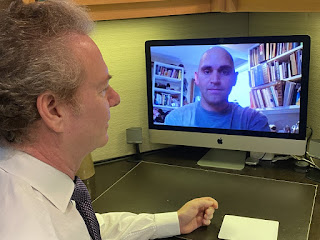
During the coronavirus pandemic, many doctors’ offices are closed for non-emergency care and more patients are embracing telemedicine. Over the past few weeks, I’ve seen an increase in virtual consultations among both established and new patients. One of my knee replacement patients had an in-office follow-up appointment on the last day it was open in early March, but given the choice, he opted for a telehealth consultation. He told me his online follow-up appointment after knee replacement was easy to set up, and it worked well. While consulting in front of his computer screen, he was even able to show me his knee.      I’ve also had telemedicine consultations with several new patients seeking an orthopedic surgeon for a hip or knee replacement. Although they can’t have the surgery right away, they’ve already been told that the best option for pain relief is a joint replacement, and they’re planning ahead.  Although elective surgeries, including hip and ...

Fall Prevention Measures Can Prevent Serious Injury

Supreme Court Justice Ruth Bader Ginsburg fell in her office this week and fractured three ribs. She was hospitalized, but fortunately, is now back home now and doing well, according to news reports. Although the details of how the 85 year-old Supreme Court Justice fell have not been released, the mishap shines a spotlight on how serious a fall can be. It fact, a fall can be devastating for older adults in particular because their bones are more fragile. They often break a hip, sustain a severe head injury... or worse. I would like to take this opportunity to wish Justice Ginsburg well and remind everyone that measures can be taken to prevent falls indoors. In your own home, or in the home of a loved one, these strategies can help prevent an accident and keep people safe. Some of these measures can be applied to the work environment, as well: Ensure that the home is free of hazards such as slippery floors, rugs that are not secured and poorly lit areas. Install handra...